
Meet Chelsea Roush, LPC
The Therapist Behind Wildlight
I didn't become a therapist because I had life figured out.
I became a therapist because I know what it feels like to watch pain change people.
For more than a decade, I lived alongside the military community as the wife of an Army Ranger. I watched extraordinary men and women carry unimaginable burdens with incredible courage while often believing they had to carry them alone. I saw the invisible weight of trauma. The ways it quietly reshapes relationships, identities, nervous systems, and entire families. It changed me. It awakened a deep respect for the resilience of the human spirit, but it also gave me a front-row seat to the cost of being in survival mode for too long.
That experience became one of the driving forces behind my work.
It shaped my work as a trauma therapist and led me to pursue specialized training in Brainspotting and EMDR therapy because I wanted to understand trauma more deeply—and more importantly, help people move through it, not simply learn to cope with it.
Life has shaped me in other ways, too.
I'm in recovery.
And if you've walked that road, you know recovery is about far more than putting down a substance. Sobriety changes behavior. Recovery changes your relationship with yourself. It asks you to become radically honest, to grieve, to forgive, to rebuild trust, to sit with discomfort instead of outrunning it, and to discover joy that isn't dependent on escape. That journey has profoundly influenced the therapist I am today, because I know firsthand that healing isn't just about removing what hurts…it's about building a life you genuinely want to wake up to.
I'm also the mom of two adventurous little boys who remind me every day that healing often looks surprisingly ordinary. Muddy feet. Sandy hair. Belly laughs. Watching a sunset instead of another screen. Slowing down long enough to notice a ladybug.
They're daily reminders that life isn't found in the big milestones nearly as often as it's found in the quiet moments we almost miss.
Maybe that's why I love this work so much.
At its core, therapy isn't about becoming someone else.
It's about coming home to yourself.
The Story Behind Wildlight
Wildlight wasn't chosen because it sounded beautiful.
It was chosen because it reminds me of something I refuse to forget.
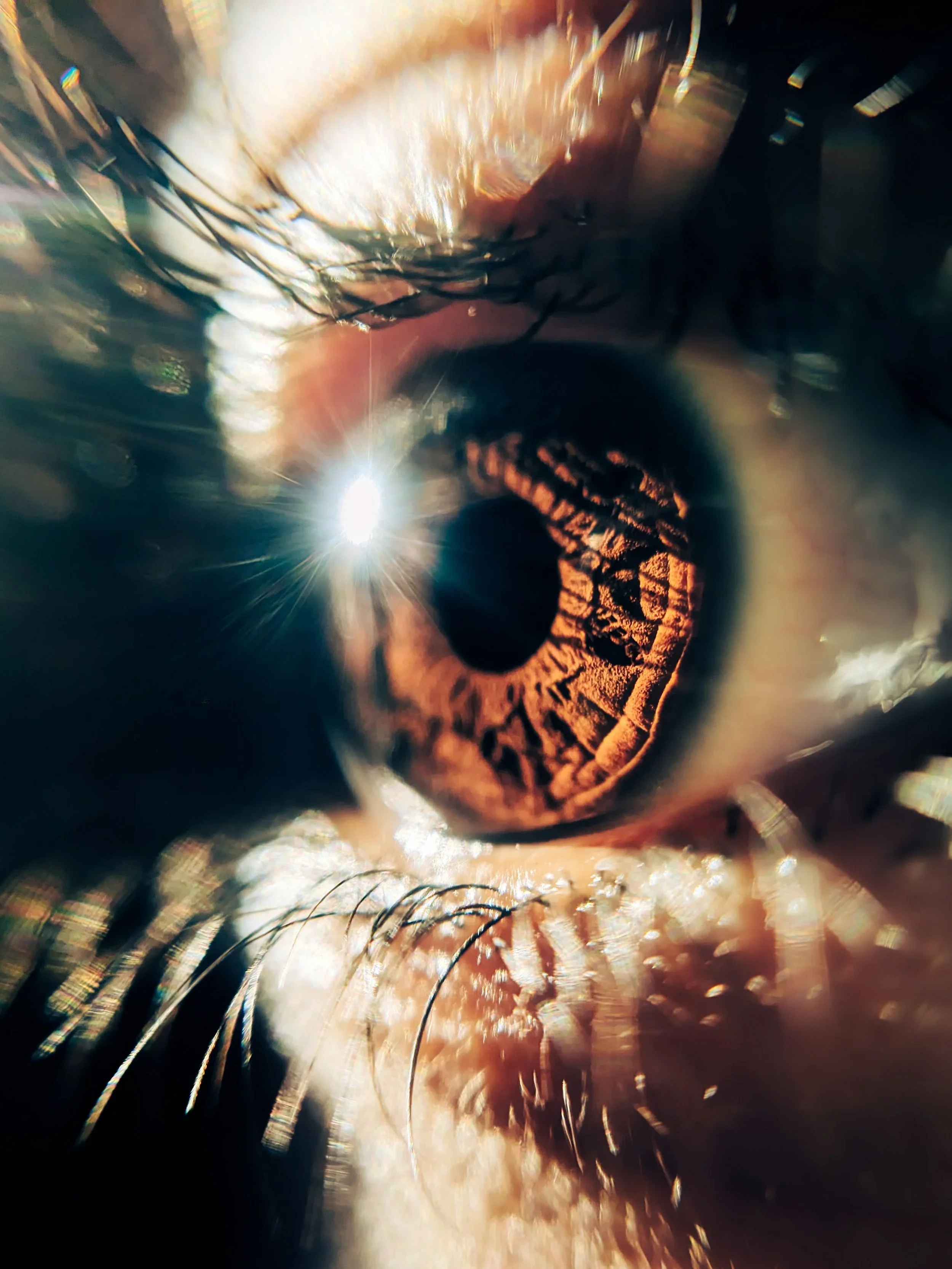
The name was inspired by a concept in photography: the way a single reflection of light in someone's eyes can transform an entire portrait. That tiny spark changes everything. Without it, an image can feel flat or lifeless. With it, something deeper appears. Add that single spark back, and suddenly the entire image comes alive.
The first time I learned about it, I couldn't stop thinking about the people who sit across from me, because I see that same light in every single one of them, even when they can't.
Trauma buries it. Anxiety convinces you it's gone. Shame tells you it never existed. Addiction numbs it. Heartbreak hides it. Years of surviving can make you forget it was ever there.
But buried isn't gone. Covered isn't extinguished. Lost isn't the same as absent.
I don't believe people are broken. I believe we carry stories, wounds, beliefs, and nervous systems that learned how to survive. And surviving is remarkable.
But at some point, surviving stops being enough.
My job isn't to hand you a new identity, convince you you're enough, or fix what's broken. My job is to help you uncover the light that's been there all along. To challenge you, walk beside you, and remind you of who you are until you remember for yourself.
Because I believe there is something incredibly sacred about watching someone reclaim their life.
That is Wildlight.

Training That Goes Deeper Than Talk Therapy
My work is grounded in graduate-level clinical training and continued advanced education in trauma treatment, nervous system processing, and evidence-based approaches. I’m intentional about continuing to learn because the people who trust me with their stories deserve more than a therapist working from the same toolbox she graduated with.
EDUCATION & LICENSURE
Master’s Degree in Marital & Family Therapy
Alliant International University
Bachelor’s Degree
University of Colorado Boulder
Licensed Professional Counselor
Colorado & U.S. Virgin Islands
ADVANCED TRAUMA TRAINING
BRAINSPOTTING CERTIFIED
Certified Brainspotting Therapist
Phase 1 & 2 Training
Brainspotting Expansion Training
Advanced 5-Day Brainspotting Intensive
Training with Lisa Larson, LMFT
EMDR TRAINED
50-Hour EMDRIA-Approved Basic Training
Parts I & II + 10 Hours of Consultation
Training with Philip Manfield, PhD
FLASH TECHNIQUE
Training with Philip Manfield, PhD
TRAUMA-FOCUSED COGNITIVE BEHAVIORAL THERAPY
TF-CBT Training
SPECIALIZED CLINICAL EDUCATION
Suicide Assessment & Prevention
Advanced continuing education in suicide-specific assessment and prevention
Telehealth Clinical Practice
Advanced continuing education in online counseling and clinical considerations for telehealth
Good therapy is deeply human.
It should also be deeply informed.
Why I Practice the Way I Do
I believe therapy extends far beyond the fifty minutes we spend together each week.
Healing doesn't only happen in an office. It happens in ordinary moments: in morning sunlight, on long runs, in quiet prayer, through honest conversations, nourishing meals, time outside, pages filled in a journal, laughing until your stomach hurts, choosing rest instead of guilt, and asking for help instead of pretending you're okay.
One of the beliefs I hold most deeply is this:
I don't ask my clients to practice things I'm unwilling to practice myself.
I move my body. I lace up my runners. I drink the water. I go to therapy. I journal. I practice my faith. I protect my peace. I stay curious. I apologize when I get it wrong. I intentionally build moments of joy into ordinary days.
Not because I have life figured out.
Because I know what happens when I stop.
Those practices aren't prescriptions. They're simply the ways I've learned to stay connected to myself. Your healing may look completely different, and together we'll discover what genuinely supports your life.

I keep my practice small.
On purpose.
I intentionally keep a small caseload. Not because I don't care to help more people, but because I care too much not to.
I never want therapy to become another appointment on my calendar. I want to remember your story. I want to remember your kids' names, the interview you're nervous about, the anniversary that's coming up, the conversation with your mom, or the dream you almost forgot to tell me about. I want enough space in my own life to arrive fully present in yours.
That also means I tend to work best with people who are ready to participate in their own healing. Not people who have everything figured out. Not people who never struggle. Simply people who are willing: willing to be honest, willing to be challenged, willing to try something different, and willing to believe, even if only for a moment, that life can become more than survival.
I'll celebrate your victories. I'll sit beside you in grief. I'll gently point out the patterns keeping you stuck. I'll challenge you when I think fear has taken the wheel. And I'll remind you of your strengths when you've forgotten them.
Healing asks something of both of us.
I believe that partnership can change a life.
Outside the Therapy Room
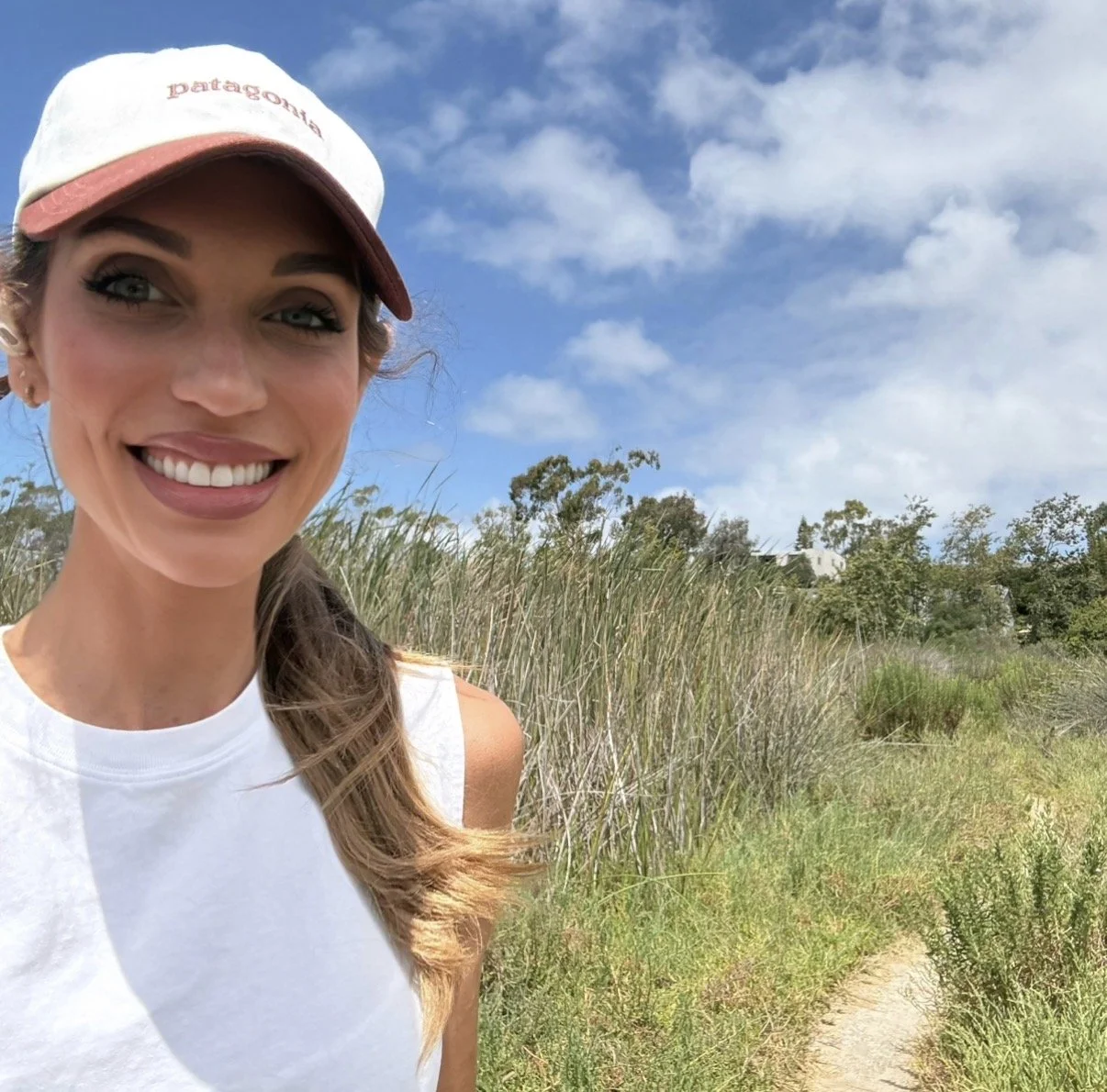
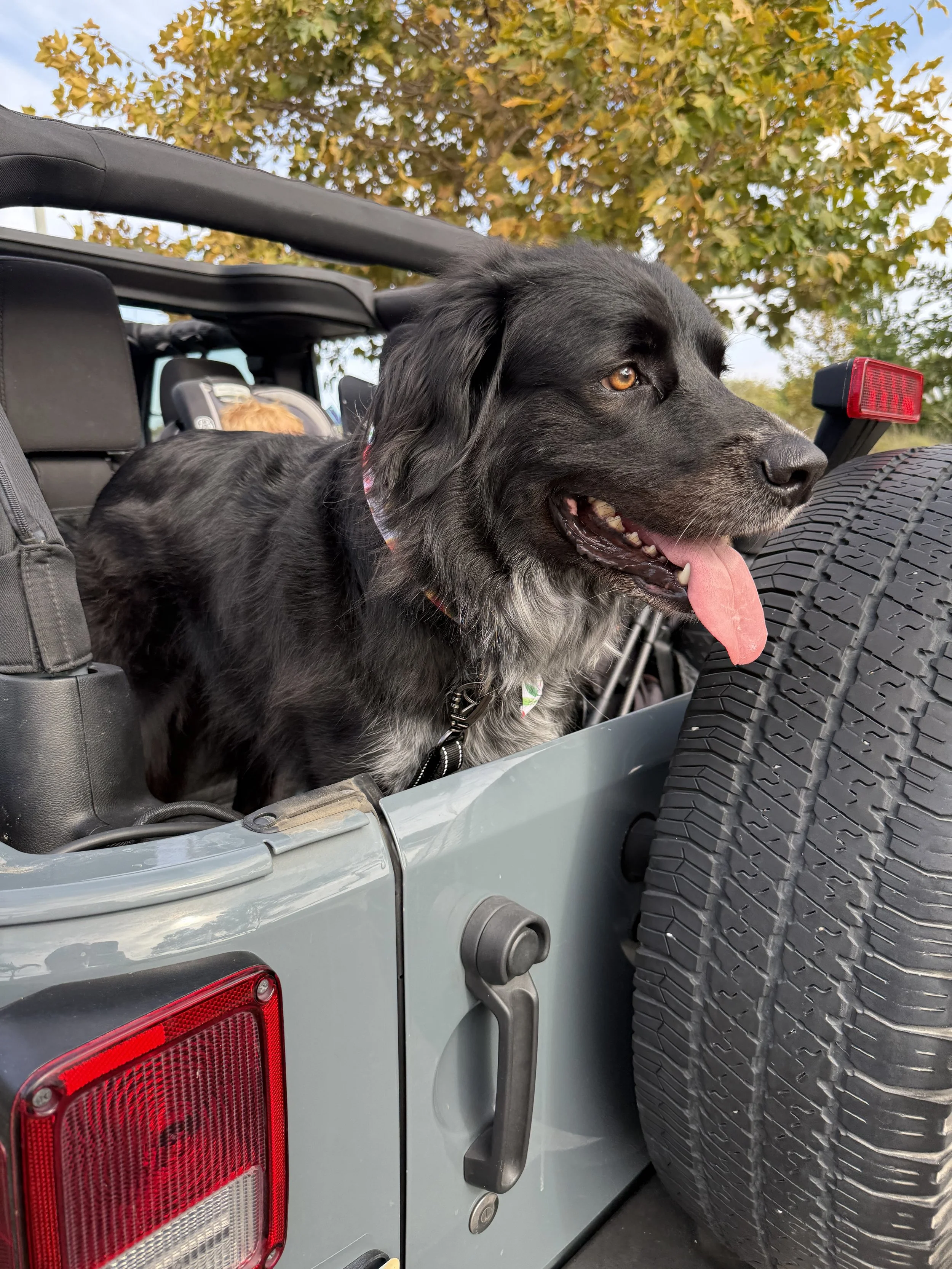
Outside the therapy room, you'll usually find me where I feel most alive-with my boys, my dog Charley, and somewhere under an open sky.
We spend as much time outdoors as we possibly can. It's one of the reasons we moved to San Diego. We weren't meant to spend our lives under fluorescent lights, boxed in by four walls and a ceiling.
We're not a family that's meant to be confined. Not by four walls, and not by fear, shame, or the stories that tell us we have to stay small. Sound familiar?
We take the top off the Jeep, crank up the music, and head toward the beach with the boys' hands in the air like they're riding a roller coaster. We chase waves, hunt for shells, wander trails, explore new places, and let Charley run wild at Dog Beach whenever he gets the chance.
That's my version of feeling fully alive.
Movement is one of the ways I come home to myself. Running just happens to be my favorite way to do it. It's where I process, pray, think, and reconnect. I love books and travel that stretch the way I see the world, conversations that linger in my mind for days, and slowing down long enough to notice the beauty most people walk right past.
Those ordinary moments of joy are the very same ones I'll encourage you to notice, too. Not because life is always beautiful, but because beauty exists alongside the hard things.
It's everywhere. We just have to learn how to look.
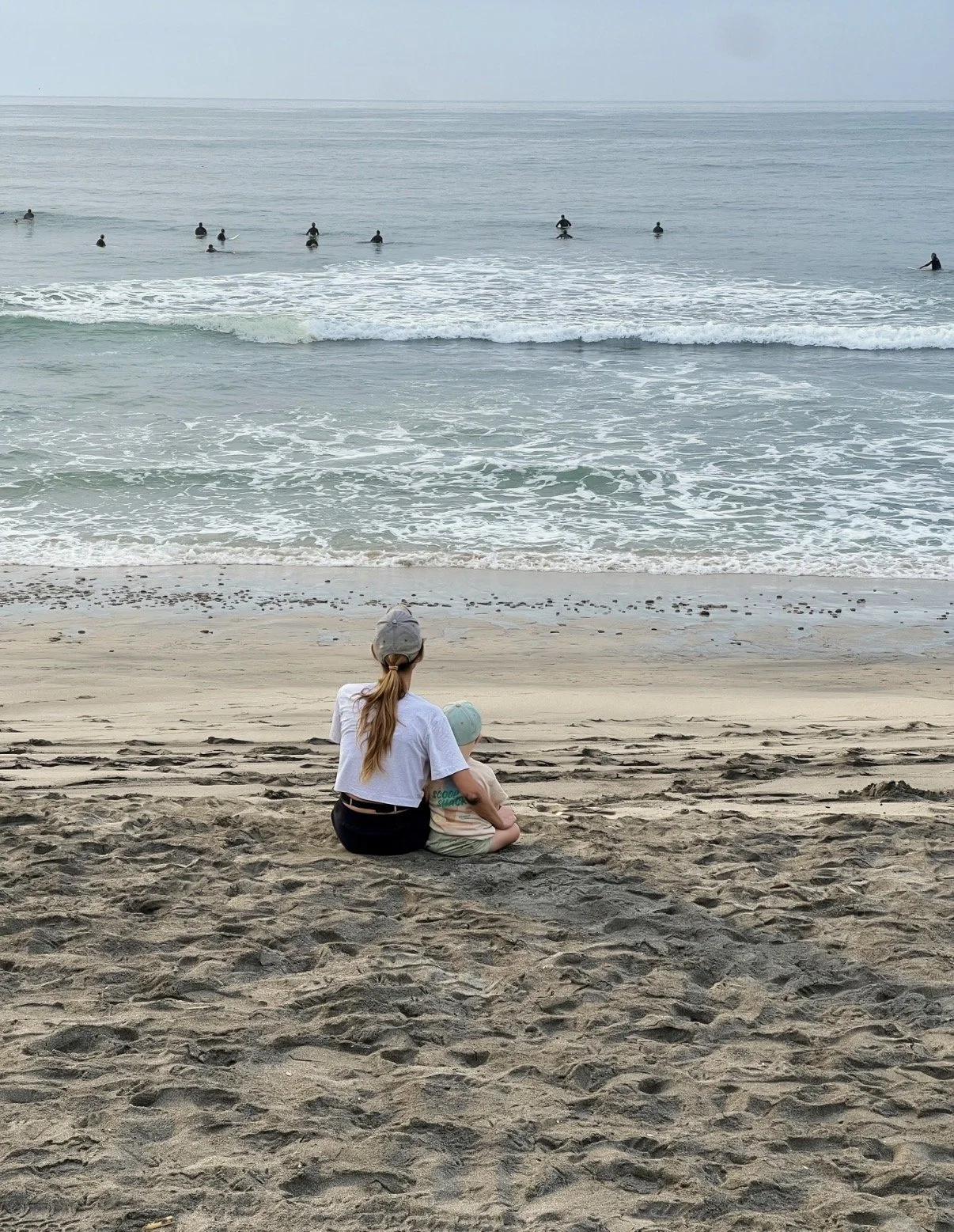
Your version of that may look completely different than mine, and that's exactly the point. Together, we'll discover what helps you come home to yourself.
Over the years, I've learned that healing rarely comes from one life-changing moment. More often, it's built quietly. In movement, in laughter, in awe, in faith, in honest conversations, belly laughs, and in slowing down long enough to notice the life unfolding right in front of us. Those are the things that continue bringing me back to myself.
Because we only get one life.
One nervous system.
One heart.
One wild, beautiful opportunity to become fully alive.
That's the life I'm trying to build. Not perfectly. Just intentionally.
And if that's the kind of life you're longing for, I'd be honored to walk beside you while you build yours.
If you’ve made it this far…
You probably aren't looking for just any therapist.
And truthfully...
I’m not.
I've built Wildlight intentionally. A small practice. A full heart. A life that reflects what I ask of my clients. Because I believe healing deserves that kind of investment.
From both of us.
If my clients were writing this instead of me...
They'd probably tell you I don't scare easily. That I'll go to the places most people spend their lives trying to avoid. That I'll lovingly call you on your bullshit when it's keeping you stuck. That I ask the questions that make you pause, stare at the ceiling for a second, and say, "...damn."
They'd tell you we laugh. Hard. That sometimes we cry. Sometimes we do both in the same session.
They'd probably warn you that I have a tendency to drop the occasional eff bomb—not because I'm trying to be edgy, but because sometimes there just isn't a better word.
They'd tell you your feelings matter here. Every single one of them. But they'd also tell you that feelings don't get the final vote. Because insight without action is just really interesting information.
Healing happens when you actually do the damn thing.
The hard conversation.
The boundary.
The apology.
The grieving.
The letting go.
The showing up.
Again.
And again.
And again.
My job isn't to rescue you. It's to walk beside you long enough that one day you realize you don't need someone else to carry the flashlight anymore.
You've become your own Wildlight.
If something about my story, my approach, or the way I see people has resonated with you...
I'd love to hear your story, too.
Then we'll roll up our sleeves and get to work.