
Brainspotting Therapy in Carlsbad, California
Virtual therapy services offered throughout California, Colorado, and the U.S. Virgin Islands
Sometimes your brain already knows exactly what it needs to heal. The hardest part is learning how to listen.

There are moments in therapy when words are exactly what's needed. And then there are moments when you can feel something sitting just beneath the surface, but no matter how many times you explain it, analyze it, or try to think your way through it, nothing really changes.
That's because not every experience is stored in language.
Some experiences can show up in ways that words alone don’t fully capture- in emotions, physical sensations, automatic reactions, and patterns that seem to live outside our conscious control.
Brainspotting is one of my favorite ways to gently access those places. It isn't about forcing healing. It's about creating the right conditions for your brain and nervous system to do what they were designed to do all along:
process, integrate, and heal.
Why Talking Isn't Always Enough
One of the most frustrating experiences in therapy is knowing exactly why you feel the way you do and still finding yourself reacting in ways you can't explain.
You know your childhood is over. You know the relationship ended. You know you're safe. You know the panic attack won't kill you.
And yet your body still braces. Your chest still tightens. You still lose sleep. You still feel pulled back into experiences you desperately wish you could leave behind.
There is nothing wrong with you.
Sometimes insight alone isn't enough to change the emotional and physical responses that remain.
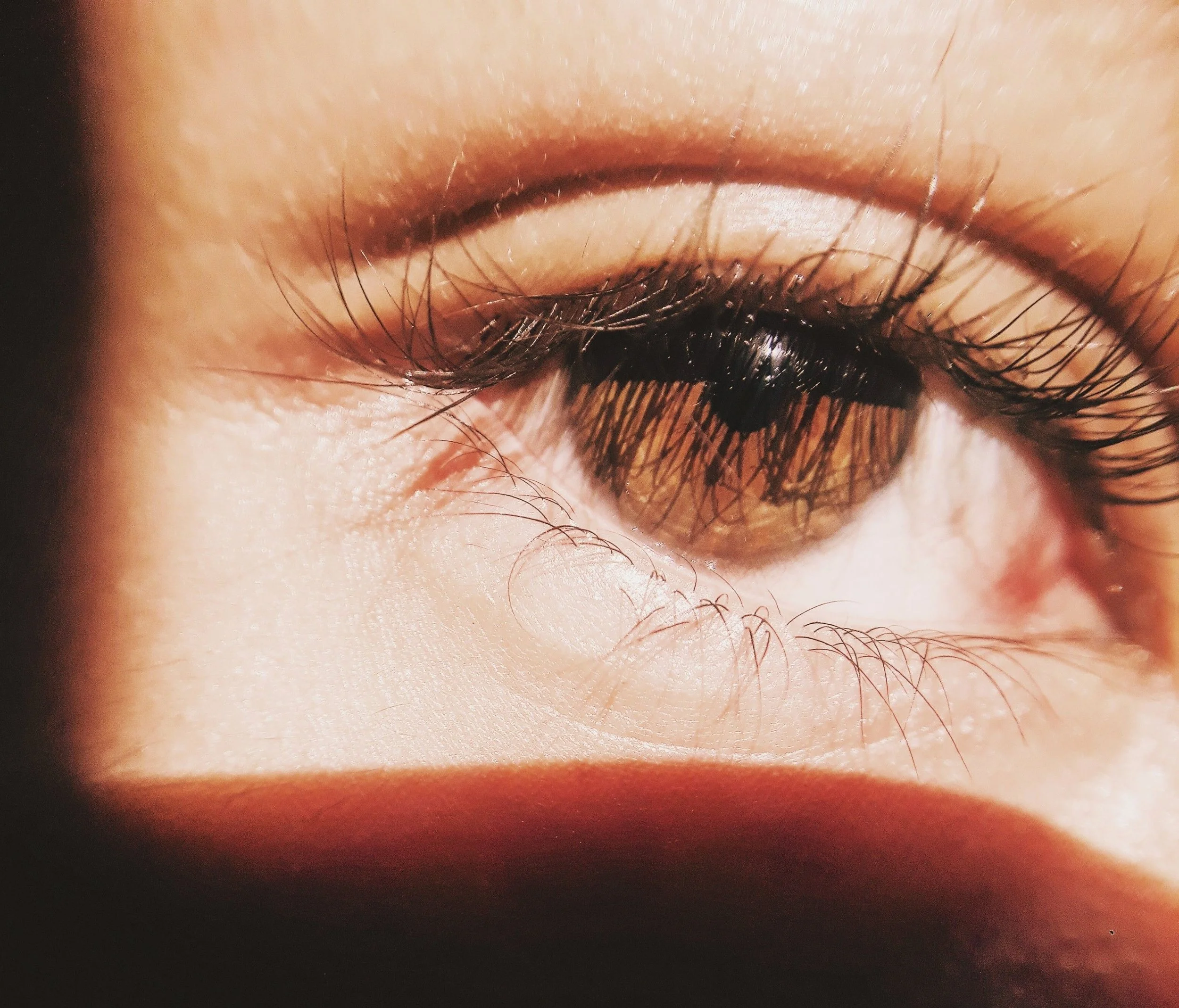
While traditional talk therapy often relies heavily on language and conscious reflection, Brainspotting brings attention to the connection between eye position, emotion, physical sensation, and what emerges in the moment. Instead of asking you to think harder, it creates space to notice and process experiences that may not shift through insight alone.

What exactly is Brainspotting?
Brainspotting was developed by Dr. David Grand, a psychotherapist who had spent years practicing EMDR. During one session, he noticed something unexpected. As his client's eyes naturally settled on a particular spot in her visual field, her emotional processing suddenly deepened in a way neither of them anticipated.
Instead of dismissing that moment, he became curious. That curiosity eventually became Brainspotting.
One of the core ideas behind Brainspotting is beautifully simple:
Where you look affects how you feel.
While that sentence sounds almost too simple, the neuroscience behind it is fascinating. Our visual system is intimately connected to the deeper parts of the brain responsible for emotion, survival, memory, and the autonomic nervous system. Brainspotting uses this connection to help access experiences that sometimes remain outside of conscious awareness, allowing the brain to process material that words alone can't always reach.
Researchers continue studying exactly why Brainspotting is so effective, but clinically we've seen remarkable results with trauma, anxiety, grief, performance issues, chronic stress, attachment wounds, and many other concerns where the nervous system has remained stuck in survival mode.

Meet Your Carlsbad Brainspotting Therapist
CHELSEA ROUSH, LPCC
Trauma Therapist
Hi, I’m Chelsea Roush, a trauma therapist specializing in Brainspotting, EMDR, and trauma-focused therapy for adults who understand a lot about themselves but still feel like something hasn’t quite shifted.
Sometimes insight gets you incredibly far. You can understand what happened, recognize your patterns, and know exactly why you respond the way you do, yet your body and nervous system can still react as though the past is happening right now.
Brainspotting gives us a different way into that work. Rather than relying only on talking and analyzing, we can slow things down and work with what’s happening beneath the surface, giving your brain and body space to process what may still feel unresolved.
Insight illuminates the path. Action carries you home.
What does a Brainspotting session actually feel like?

If you've never experienced Brainspotting before, it's probably unlike any therapy you've done.
We're not racing toward insight, trying to analyze every detail of your story, or looking for the "right" thing to say. Instead, we slow down. We pay close attention to what your body is noticing. Together, we'll identify an eye position, or "brainspot," that seems connected to the issue we're working on. From there, my role becomes surprisingly simple.
I follow you.
One of the philosophies I love most about Brainspotting is that it asks the therapist to lead less and observe more. Rather than assuming I know exactly where your healing should go, I pay close attention to where your own brain and nervous system naturally want to take us. Some people notice emotions. Others notice physical sensations, memories, images, or seemingly random thoughts. Some experience very little at first.
There isn't a right way to Brainspot.
Your nervous system already knows how to heal. My role is to create an environment where it finally has the opportunity to do so.
Is Brainspotting Therapy in Carlsbad, CA Right for Me?

One of the things I appreciate most about Brainspotting is that it doesn't begin with the assumption that healing has to happen through talking. It begins with a different question:
What if your nervous system already knows exactly where the healing needs to happen?
For many people, that's an incredibly freeing idea.
Maybe you've spent years in therapy and understand your story inside and out, yet your body still reacts as though the danger is happening today. Maybe you've read the books, journaled, prayed, analyzed your childhood, and can explain exactly why you feel the way you do. Insight is incredibly valuable, but there comes a point where many people discover that understanding their story isn't the same thing as feeling free from it.
That's where Brainspotting often shines.
Rather than asking your thinking brain to work harder, Brainspotting allows us to gently access the deeper parts of the brain and nervous system where many overwhelming experiences are stored. Sometimes your body has been carrying the truth long before your mind has found the words for it.
I've found Brainspotting to be especially powerful for trauma, PTSD, military and first responder experiences, anxiety, panic attacks, grief, childhood trauma, chronic stress, addiction recovery, performance anxiety, and those moments when someone simply says, "I don't know why I keep reacting this way." It's also a wonderful option for people who have done years of traditional talk therapy, have gained tremendous insight, and yet still feel like something inside them hasn't quite shifted.

Why I Keep Coming Back To Brainspotting
When I first trained in EMDR, I remember thinking, This is what I've been looking for. It gave me a way to help people move beyond simply understanding their trauma and begin processing it at the level of the nervous system. It fundamentally changed the way I thought about healing.
Then I discovered Brainspotting.
What immediately drew me in wasn't the technique itself. It was the philosophy behind it.
Brainspotting assumes something that I have found to be profoundly true in both therapy and in life: your nervous system is often wiser than your conscious mind. Long before we're able to explain why something hurts, our body is already carrying it. Long before we have language for fear, grief, shame, or loss, our nervous system has been working tirelessly to protect us. Sometimes those protections become so familiar that we mistake them for our personality.
I've watched people understand their story beautifully and still feel trapped inside it. They've done the work. They've talked about it. They've made sense of it. And yet, when life gets hard, their body still responds as though it's living in a chapter that's been over for years.
Brainspotting reminds me that healing doesn't always happen because we find better words. Sometimes it happens because we stop asking the thinking brain to solve a problem that's living somewhere deeper. We slow down. We listen. We pay attention. We trust that, given the right environment, the brain and nervous system are remarkably capable of moving toward healing.
That's what continues to bring me back to Brainspotting.
Not because I believe it's better than EMDR. Not because I think every client needs it.
Because it has made me a better therapist.
It's made me slower to assume, quicker to listen, and more willing to trust the incredible wisdom of the human nervous system. I've watched clients reach places that years of talking couldn't quite access, not because they weren't trying hard enough, but because their healing needed a different doorway.
That's ultimately what I want every client to know.
I'm not committed to a modality. I'm committed to finding the approach that gives you the greatest opportunity to heal.
Still curious about Brainspotting?
Hear directly from Dr. David Grand, the developer of Brainspotting, about how the approach works and what makes it different from traditional talk therapy.
Questions I Hear Most Often
Brainspotting tends to spark a lot of curiosity. These are some of the questions I'm asked most often before we begin:

-
This is one of my favorite questions because I genuinely love both approaches.
I often think of EMDR and Brainspotting as two different roads leading toward the same destination. Both are designed to help the brain and nervous system process experiences that have become "stuck." The destination is similar. The path getting there is different.
EMDR is largely about processing. It follows a structured, research-backed protocol that helps the brain revisit and reorganize memories that were never fully processed when they first occurred. It's incredibly effective for helping the nervous system recognize that what happened belongs in the past, not the present.
Brainspotting, on the other hand, feels more like accessing. Rather than beginning with a specific memory, it begins by listening to the nervous system. The underlying belief is that your brain and body often know far more than your conscious mind can immediately explain. Instead of asking, "Let's process this memory," Brainspotting asks, "What is your nervous system trying to show us?"
One approach isn't better than the other. They simply invite healing in different ways. Some people respond beautifully to the structure and rhythm of EMDR, while others find that Brainspotting's slower, more intuitive approach allows them to reach places that words and conscious thought haven't been able to access.
Ultimately, my job isn't to convince you that one modality is superior. My job is to understand you well enough to know which approach your nervous system is most likely to respond to, or whether thoughtfully integrating both will give you the greatest opportunity to heal.
-
I don't think that's the right question.
I often think of EMDR and Brainspotting as two different roads leading toward the same destination. Both are evidence-informed, both help the brain process experiences that have become stuck, and both can be incredibly effective. The better question is, Which approach best fits you?
Some people appreciate the structure and organization of EMDR. Others find Brainspotting's slower, less directive style allows them to access places that words have never quite reached.
Over the years, I've found that the modality itself matters less than thoughtfully matching the approach to the individual.
-
No. While talking can certainly be part of Brainspotting, it's not the therapy's primary focus.
Some clients talk a great deal during sessions, while others spend long periods simply noticing what their body is experiencing. We follow your nervous system rather than forcing conversation where it isn't needed.
-
That's completely okay.
Many people come into Brainspotting saying, "I don't even know where to start." You don't have to.
We aren't relying solely on your ability to explain your experience because your nervous system often knows much more than your conscious mind can immediately put into words.
-
Yes. Brainspotting is supported by a growing body of research, and while it hasn't been studied as extensively as EMDR, the research continues to expand.
Clinically, many therapists, including myself, have seen incredibly meaningful results with trauma, anxiety, grief, performance concerns, and many other issues.
Like every modality I use, I integrate Brainspotting thoughtfully and based on what best serves the individual sitting across from me.
-
Both! I offer in-person Brainspotting therapy at my Carlsbad office and virtual Brainspotting therapy throughout California, Colorado, and the U.S. Virgin Islands. Brainspotting can be used virtually as well as in person, and we can talk about which format feels like the best fit for you and the work you want to do.

Ready to Start Brainspotting Therapy in Carlsbad, California?
Sometimes the things we can’t think our way out of need a different way through.
A free consultation is a chance to talk about what’s bringing you here, ask questions about Brainspotting, and see whether this approach and Wildlight feel like the right fit. You don’t need to know whether Brainspotting is exactly what you need before we begin. We can figure that out together.